Understanding Italian road signs is crucial for safe travel; resources like the 2016 Highway Code translation (PDF) offer comprehensive guidance for drivers and tourists.
Importance for Tourists and Drivers
For tourists navigating Italy’s roadways, familiarity with its traffic signs is paramount to a stress-free and legally compliant journey. Ignoring signage can lead to hefty fines, particularly within Zona Traffico Limitato (ZTL) areas. A readily available PDF guide, such as the 2016 Highway Code translation, provides essential visual references and explanations.
Drivers, both local and visitors, benefit from understanding the nuances of Italian road markings and signs. These resources detail everything from speed limits and parking regulations (indicated by blue, white, or yellow markings) to warnings about specific hazards like curves or slippery conditions.
Accessing a PDF document allows for offline study and quick reference, ensuring preparedness even without internet connectivity. Knowing what signs mean prevents dangerous situations and enhances overall road safety for everyone.
Overview of the Italian Highway Code
The Italian Highway Code governs all aspects of road usage, with traffic signs forming a critical component. A comprehensive understanding of these signs is essential for legal and safe driving within Italy. Fortunately, an English translation of the 2016 Highway Code is available as a downloadable PDF.
This PDF details not only the visual representation of each sign but also its precise meaning and the corresponding regulations. It covers regulatory, warning, and informational signs, including directional indicators for Autostrade and state roads.
The code also outlines road marking conventions and parking rules, vital for avoiding penalties. Utilizing this PDF resource provides a solid foundation for interpreting Italian road signage and navigating the country’s diverse road network confidently and responsibly.
Types of Italian Traffic Signs
Italian traffic signs fall into regulatory, warning, and informational categories, comprehensively detailed in available PDF guides for easy reference and understanding.
Regulatory Signs
Regulatory signs dictate what drivers must or must not do, and are legally binding. These signs, thoroughly illustrated in downloadable PDF guides like the UK Motorists resource, are crucial for navigating Italian roads safely and legally. They encompass prohibition and mandatory instructions.
Prohibition signs, often depicted as red circles with a white background and a black symbol, forbid specific actions – like entering a zone or exceeding a speed limit. Conversely, mandatory signs, typically circular with a blue background, instruct drivers on required actions, such as turning in a specific direction.
Understanding these distinctions, as clearly presented in the 2016 Italian Highway Code translation PDF, is paramount. Ignoring regulatory signs can result in fines or even accidents, making familiarity essential for all drivers.
Prohibition Signs
Prohibition signs, prominently featured in Italian traffic regulations and detailed within downloadable PDF guides, are easily identifiable by their red circles with white backgrounds. These signs unequivocally forbid specific actions, ensuring road safety and order. The PDF resources, like those from UK Motorists, showcase a wide array of these prohibitions.
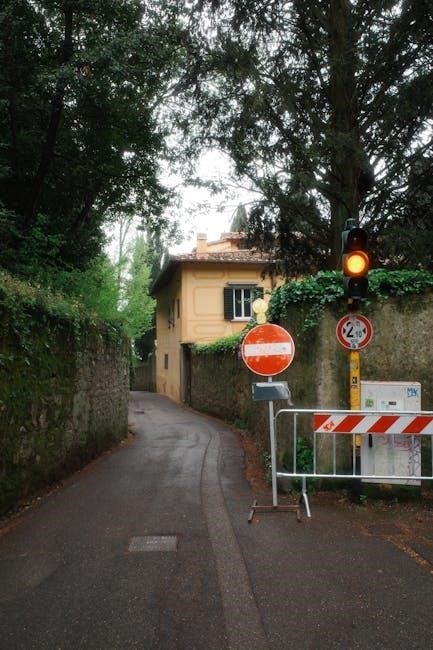
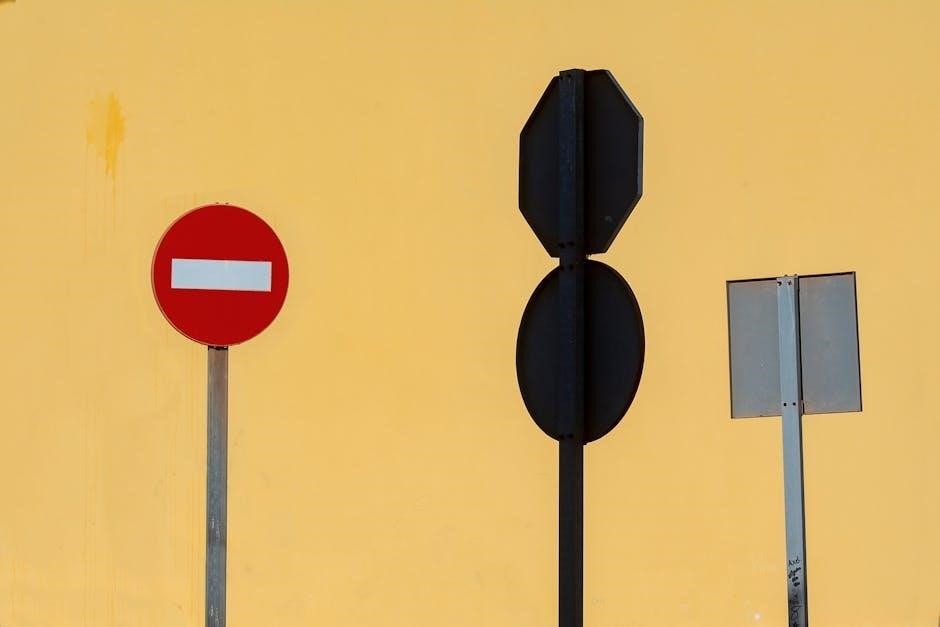
Common examples include prohibitions against entering zones (often ZTLs – Zona Traffico Limitato), exceeding speed limits, overtaking, or using specific vehicle types on certain roads. A simple horizontal white bar across a red circle indicates a general prohibition of vehicle passage.
The 2016 Highway Code translation PDF provides a comprehensive visual catalog of these signs, aiding in quick recognition. Disregarding these prohibitions carries legal consequences, emphasizing the importance of understanding their meaning.
Mandatory Signs
Mandatory signs, clearly illustrated in Italian traffic sign PDFs, dictate required actions for drivers. These signs are typically circular with a blue background and white symbols, compelling adherence to specific rules for safe navigation. Resources like the UK Motorists PDF guide offer detailed explanations and visual examples.
Common mandatory signs include requirements to follow a specific route, maintain a minimum speed, or utilize headlights in designated areas. These signs override general rules, ensuring drivers comply with particular road conditions or regulations.
The 2016 Highway Code translation PDF serves as an invaluable resource, providing a complete overview of all mandatory signs. Understanding these directives is crucial for legal and safe driving within Italy, preventing potential fines or accidents.
Warning Signs
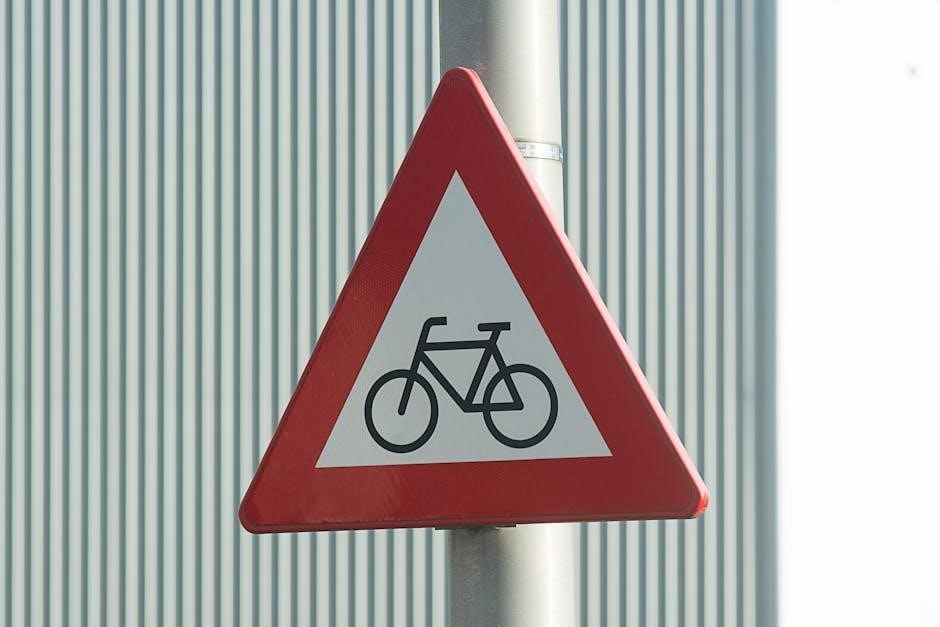
Warning signs in Italy, comprehensively detailed in available PDFs like the UK Motorists guide, alert drivers to potential hazards ahead. These signs are typically triangular with a red border and a yellow or white interior displaying a symbolic representation of the danger. Recognizing these is vital for proactive and safe driving.
The Italian road sign PDFs showcase a wide range of warnings, encompassing general hazards like winding roads or pedestrian crossings, and specific dangers such as slippery surfaces or approaching intersections. These signs don’t prohibit action, but demand increased caution.
Referencing the 2016 Highway Code translation PDF provides a complete visual catalog, aiding in quick identification. Being prepared for potential hazards, as indicated by these signs, significantly reduces the risk of accidents while navigating Italian roadways.
General Hazard Warnings
General hazard warnings, thoroughly illustrated in Italian traffic sign PDFs, prepare drivers for potentially dangerous situations requiring increased vigilance. These typically feature a triangular sign with a red border and a yellow interior, displaying universally recognized symbols.
Common examples, detailed in resources like the UK Motorists guide, include signs indicating winding roads, uneven surfaces, or the presence of animals. These warnings don’t specify the exact nature of the hazard, but prompt drivers to reduce speed and exercise caution.
The 2016 Highway Code translation PDF offers a complete visual reference, enabling drivers to quickly identify and understand these crucial warnings. Proactive awareness, fostered by studying these PDFs, is key to safe navigation on Italian roads.
Specific Hazard Warnings (e.g., Curves, Slippery Road)
Specific hazard warnings, comprehensively documented in Italian traffic sign PDFs, provide detailed alerts about particular road conditions. Unlike general warnings, these signs pinpoint the exact danger drivers may encounter ahead, demanding immediate adjustments to driving behavior.
Examples readily found in resources like the UK Motorists PDF include signs for sharp curves (often with an arrow indicating the bend’s direction), slippery road surfaces (depicting a skidding car), and falling rocks. These signs are crucial for preventing accidents.
The 2016 Highway Code translation PDF serves as an invaluable visual guide, allowing drivers to familiarize themselves with these specific symbols before encountering them on Italian roadways. Recognizing these signs proactively enhances road safety significantly.
Information Signs
Information signs, thoroughly illustrated in available Italian traffic sign PDFs, are designed to guide and assist drivers, rather than regulate or warn. These signs provide essential details about destinations, routes, services, and points of interest along the Italian road network.
Resources like the UK Motorists PDF showcase directional signs for Autostrade (motorways) and State Roads, clearly indicating routes to major cities and towns. Distance and route information are also prominently displayed, aiding navigation. Tourist information signs, often featuring specific symbols, highlight nearby attractions.
The 2016 Highway Code translation PDF offers a complete visual catalog of these signs, enabling drivers to quickly interpret their meaning and plan their journeys effectively. Understanding these signs is key to stress-free travel.
Directional Signs (Autostrade, State Roads)
Directional signs, extensively detailed within Italian traffic sign PDFs, are vital for navigating the Autostrade (motorways) and State Roads. These signs utilize clear symbols and place names to indicate routes to various destinations, ensuring drivers can easily follow their intended path.
The UK Motorists PDF provides real-world examples, showcasing how these signs display city names, route numbers, and distances. Autostrade signs often feature a green background, while State Road signs typically use a blue background for easy identification.
The 2016 Highway Code translation PDF offers a comprehensive visual guide, allowing drivers to familiarize themselves with the specific designs and conventions used for directional signage throughout Italy, promoting safer and more efficient travel.
Distance and Route Information
Italian traffic sign PDFs, like the one from UK Motorists, highlight how distance and route information is presented. Signs clearly display distances to upcoming towns and cities, often in kilometers, aiding route planning and estimated travel times.
Route numbers are prominently featured, helping drivers confirm they are on the correct path. The 2016 Highway Code translation PDF details the standardized formats for displaying this crucial information, ensuring consistency across the Italian road network.
Examples within these resources show signs indicating distances to places like Borgosole (48 kilometers on State Highway 10), demonstrating the practical application of these directional cues for a smoother journey.
Tourist Information Signs
Italian traffic sign PDFs, such as those available online, demonstrate the presence of dedicated tourist information signage. These signs utilize recognizable symbols to direct travelers towards points of interest, historical sites, and recreational areas.
The UK Motorists PDF provides examples of these signs, aiding visitors in navigating to popular destinations. While not as prevalent as regulatory or warning signs, they are crucial for enhancing the tourist experience and promoting local attractions.
These resources often illustrate signs indicating nearby services like campsites or petrol stations, further assisting tourists. Understanding these symbols, detailed in the 2016 Highway Code translation PDF, contributes to a more enjoyable and stress-free exploration of Italy.

Understanding Italian Road Markings
Italian traffic sign PDFs detail road markings alongside signs, clarifying lane usage, pedestrian crossings, and parking regulations for safer navigation.
Lane Markings
Lane markings in Italy, thoroughly documented in available Italian traffic sign PDFs, are essential for understanding permitted movements and maintaining order on roadways. Solid white lines delineate lane boundaries, while broken white lines permit lane changes when safe. Continuous yellow lines indicate areas where overtaking is prohibited, and double yellow lines signify a complete ban on crossing or overtaking.
PDF guides illustrate how different combinations of solid and broken lines dictate traffic flow. Understanding these markings is vital, especially on autostrade (highways) where speeds are higher. The documents also clarify markings used to indicate reversible lanes, often controlled by electronic signals, and those designating bus or taxi lanes. Proper interpretation, aided by these resources, contributes significantly to a smoother and safer driving experience throughout Italy.
Pedestrian Crossings
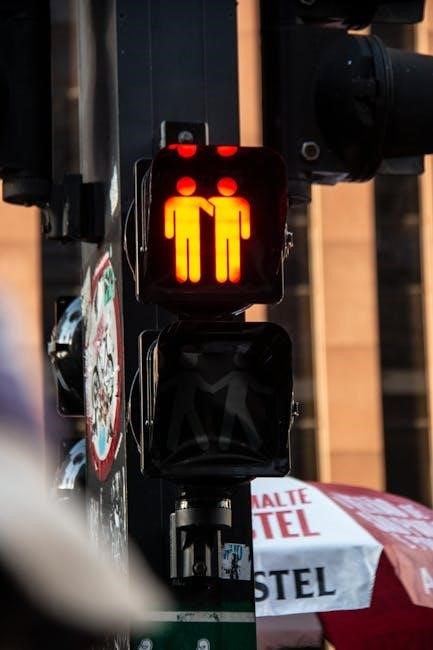
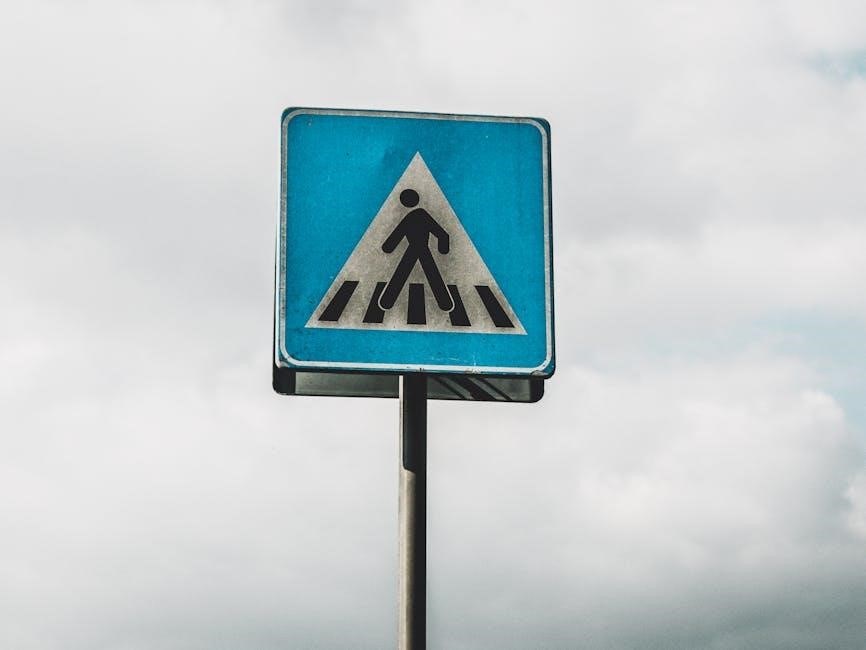
Italian traffic sign PDFs clearly depict pedestrian crossing markings, crucial for both drivers and pedestrians. Typically, these are marked by zebra stripes – alternating white and dark stripes painted across the roadway. Drivers are legally obligated to yield to pedestrians within these designated zones. Some crossings are signalized, featuring pedestrian-activated lights, and these are also detailed within the downloadable guides.
The PDFs emphasize recognizing variations, such as raised pedestrian crossings designed to slow traffic. Understanding the specific markings and associated regulations, as illustrated in these resources, is paramount for preventing accidents. Furthermore, they highlight the importance of increased vigilance near schools and residential areas where pedestrian traffic is often higher. Safe navigation relies on recognizing and respecting these vital road features.
Parking Regulations Markings
Italian traffic sign PDFs thoroughly explain parking regulations, indicated by color-coded road markings. Blue markings denote paid parking zones, often requiring ticket display. White markings signify free parking, but may have time limits detailed on nearby signs. Yellow markings generally indicate reserved parking – for residents, disabled individuals, or specific purposes – and are strictly enforced.
These PDFs emphasize understanding the accompanying signage, as markings alone aren’t always sufficient. Double yellow lines prohibit parking at any time, while single yellow lines indicate restrictions during certain hours. The guides also detail markings for loading/unloading zones and bus stops. Accurate interpretation, aided by these resources, prevents fines and ensures smooth navigation of Italian cities.
Specific Signs to Watch Out For
Italian traffic sign PDFs highlight crucial signs like ZTLs, speed limits, and color-coded parking indicators, essential for avoiding fines and ensuring compliance.
ZTL (Zona Traffico Limitato) Signs
ZTL signs, prominently featured in Italian traffic sign PDFs, denote “Limited Traffic Zones,” restricting access to vehicles based on time and authorization. These zones, common in historical city centers, are indicated by a circular sign with a green background and a red “ZTL” abbreviation.
Entering a ZTL without a permit results in substantial fines, automatically issued via license plate recognition cameras. PDFs emphasize recognizing these signs before entering a city, as exceptions are limited. Pay close attention to supplementary panels detailing access times and authorized vehicle types.
Understanding ZTL regulations, as detailed in downloadable guides, is paramount for tourists and drivers to avoid costly penalties and navigate Italian cities legally and smoothly. Ignoring these signs can quickly ruin a vacation!
Speed Limit Signs
Speed limit signs in Italy, thoroughly documented in Italian traffic sign PDFs, are crucial for safe driving and avoiding fines. These signs are typically circular, displaying the speed limit in kilometers per hour (km/h) within a red ring. A white background indicates a permanent limit, while a yellow background signifies a temporary or variable limit.
PDF guides highlight the importance of recognizing electronic speed control warning signs – a sign depicting an eye – indicating areas monitored by speed cameras. Exceeding the posted limit, even slightly, can lead to significant penalties.
Resources like UK Motorists’ PDF provide real photos of these signs, aiding identification. Always adhere to posted limits, as they vary based on road type and conditions, ensuring a lawful and secure journey.
Parking Signs (Blue, White, Yellow)
Italian parking regulations, detailed in available traffic sign PDFs, are indicated by distinct colored markings. Blue signs denote paid parking zones, often requiring ticket purchase from a nearby machine or app. White signs signify free parking, but may have time restrictions, so careful observation is key.
Yellow signs indicate reserved parking, typically for residents, disabled individuals, or specific permit holders. Illegally parking in a reserved spot results in fines and potential vehicle removal.
PDF guides emphasize understanding accompanying text specifying time limits or restrictions. Resources like UK Motorists’ PDF offer visual examples, aiding correct interpretation and preventing costly parking violations. Always check signage carefully before leaving your vehicle.
Resources for Learning Italian Traffic Signs
Numerous online resources, including Wikipedia and UK Motorists, provide Italian road sign information, with downloadable PDF guides for convenient offline study and reference.
Online Resources (Wikipedia, UK Motorists)
For a comprehensive visual guide to Italian road signs, Wikipedia offers an excellent resource with detailed pictures and explanations. This platform provides a broad overview, covering various sign types and their meanings, making it a great starting point for familiarization.
Alternatively, the UK Motorists website hosts a valuable PDF document specifically dedicated to Italian road traffic signs. This downloadable guide includes real photographs of commonly encountered signs, aiding in practical recognition while driving. It also features essential Italian vocabulary related to road signage, enhancing understanding.
Both resources are freely accessible and regularly updated, ensuring the information remains current with Italian traffic regulations. Utilizing these online tools can significantly improve a driver’s or tourist’s ability to navigate Italian roads safely and confidently, decoding the often-complex system of signage.
PDF Guides and Downloads (2016 Highway Code Translation)
A readily available and highly recommended resource is the English translation of the 2016 Italian Highway Code. This comprehensive PDF document details Italian traffic laws, regulations, and crucially, signage design. It’s a direct translation from the original Italian version, offering accurate and detailed information.
The PDF covers a vast array of road signs, explaining their purpose and meaning within the Italian driving system. It’s particularly useful for understanding the nuances of Italian road rules, which can differ significantly from those in other countries. Downloading this guide provides a portable and accessible reference.
This document isn’t just a list of signs; it’s a complete guide to navigating Italian roads legally and safely. It’s an invaluable tool for both tourists and those planning extended stays, ensuring a smoother and more informed driving experience.
Mobile Apps for Traffic Sign Recognition
While a PDF guide like the 2016 Highway Code translation is excellent for pre-trip study, mobile applications offer real-time assistance while driving in Italy. Several apps utilize your smartphone’s camera to identify Italian traffic signs instantly.
These apps can be incredibly helpful, especially when encountering unfamiliar signage or driving in challenging conditions. They often provide translations and explanations, enhancing understanding and promoting safer driving habits. Some apps even offer offline functionality, crucial for areas with limited data connectivity.
Although not a direct replacement for thorough preparation using resources like the PDF, these apps serve as valuable supplementary tools. They can quickly clarify ambiguous signs and contribute to a more confident and secure driving experience throughout Italy.
Italian Traffic Sign Vocabulary
Learning key terms like “Divieto di Sosta” (No Parking) – found within the Italian road sign PDF – is vital for interpreting signage and avoiding fines.
Common Terms (e.g., “Divieto di Sosta” ⸺ No Parking)
Navigating Italian roads requires familiarity with essential vocabulary displayed on traffic signs. The readily available PDF guides, such as the 2016 Highway Code translation, are invaluable resources. “Divieto di Sosta” directly translates to “No Parking,” a crucial phrase to recognize, often accompanied by specific time restrictions.
Other frequently encountered terms include “Senso Unico” (One Way), “Limite di Velocità” (Speed Limit), and “Uscita” (Exit). Understanding these terms, alongside the visual cues of the signs themselves, significantly enhances road safety. The PDF resources often provide both the Italian phrase and its English equivalent, facilitating quick comprehension.
Being able to decipher these common terms, as detailed in the downloadable PDFs, empowers drivers to confidently interpret Italian road regulations and avoid potential violations. Prioritizing vocabulary acquisition is a key component of responsible driving in Italy.
Emergency Signage Terms
Recognizing emergency signage is paramount for safety while driving in Italy. Comprehensive PDF guides, like the translated 2016 Highway Code, detail crucial terms for urgent situations. Look for “Emergenza” (Emergency) which often indicates the location of assistance or emergency phones. “Ospedale” signifies a hospital, a vital sign in case of medical need.
Furthermore, understanding “Pericolo” (Danger) is essential, as it precedes warnings of potential hazards. The PDF resources illustrate signs for specific emergencies, such as fire (“Incendio”) or accidents (“Incidente”). Knowing these terms allows for quicker responses to unforeseen events.
These PDF guides provide visual examples alongside translations, ensuring clear comprehension. Familiarizing yourself with these emergency signage terms, readily available in downloadable formats, is a proactive step towards safe and informed travel throughout Italy.
Sign Colors and Their Meanings
Italian traffic signs utilize a standardized color-coding system, thoroughly explained in downloadable PDF guides like the 2016 Highway Code translation. Red circles universally denote prohibitions – actions that are not allowed. Blue circles typically indicate mandatory instructions that drivers must follow.
Yellow diamonds serve as warning signs, alerting drivers to potential hazards ahead. Green backgrounds generally convey permissive information, such as directions or route guidance. White or yellow rectangular signs provide general information, including place names or distances.
These PDF resources visually demonstrate each color’s significance, aiding quick recognition. Understanding this color scheme, detailed within the comprehensive guides, is crucial for interpreting Italian road signage effectively and ensuring a safe driving experience throughout the country.
Navigating Italian Roads Safely
Reviewing Italian traffic signs, ideally using a PDF guide, promotes defensive driving and awareness of local customs for a secure journey.
Defensive Driving Techniques
Employing defensive driving is paramount when navigating Italian roads, and a solid understanding of the signage, often detailed in readily available PDF guides, is foundational. Anticipate potential hazards by proactively scanning for warning signs – curves, slippery conditions, and pedestrian crossings. Maintain a safe following distance, especially considering varied driving styles.
Be prepared for unexpected signage, as Italian roads can present a multitude of instructions. Regularly referencing a translated PDF of the Highway Code reinforces recognition of regulatory and information signs. Prioritize awareness of ZTL zones, indicated by specific signs, to avoid fines. Vigilance regarding speed limits, also clearly marked, is essential. A proactive approach, bolstered by sign knowledge, significantly enhances road safety.
Awareness of Local Driving Customs
Italian driving customs differ from many countries, necessitating heightened awareness alongside understanding traffic signs – often detailed in comprehensive PDF guides. Expect more assertive driving styles, particularly in urban areas, and frequent use of the horn for communication, not necessarily aggression. Roundabouts are common; yield to traffic already circulating.
Parking regulations, signified by color-coded markings (blue, white, yellow – explained in PDF resources), are strictly enforced. Familiarize yourself with ZTL (Limited Traffic Zones) indicated by specific signage, as unauthorized entry results in fines. Be mindful of scooter and bicycle traffic, prevalent in cities. A PDF translation of the Highway Code aids in recognizing these nuances, fostering safer and more respectful navigation of Italian roadways.
Dealing with Unexpected Signage
Encountering unfamiliar Italian road signs is inevitable, even with preparation using resources like the translated Highway Code PDF. Prioritize caution and reduce speed when unsure of a sign’s meaning. Utilize online tools (Wikipedia, UK Motorists) for quick reference, if safe to do so – never while actively driving.
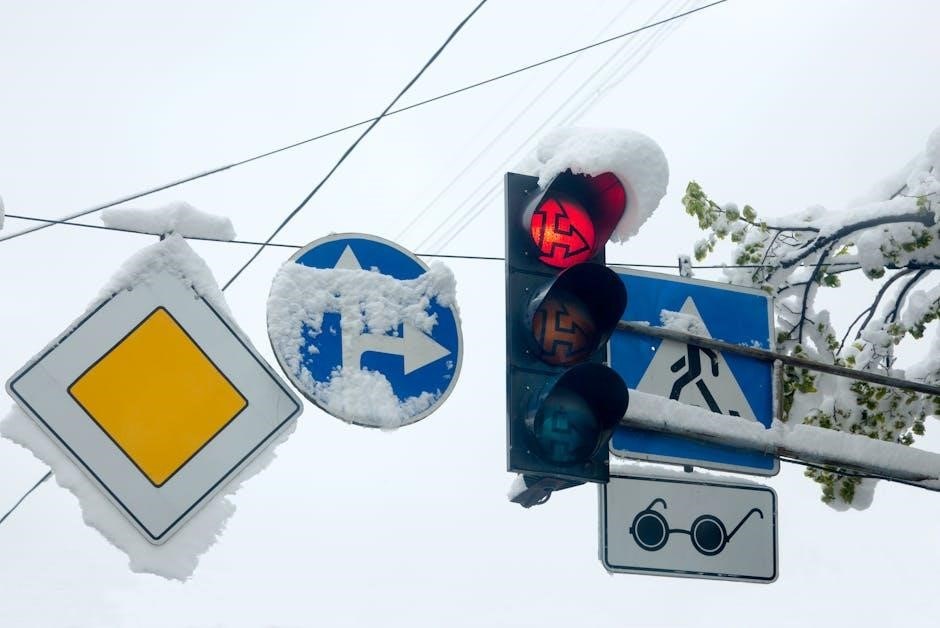
Remember that signage can be dense, and interpretations may vary. If a sign appears contradictory or unclear, err on the side of caution and follow the most restrictive instruction. The PDF guides often include images of common signs, aiding in identification. Defensive driving, combined with a proactive approach to understanding potential hazards, is crucial when facing unexpected or ambiguous Italian road signage.